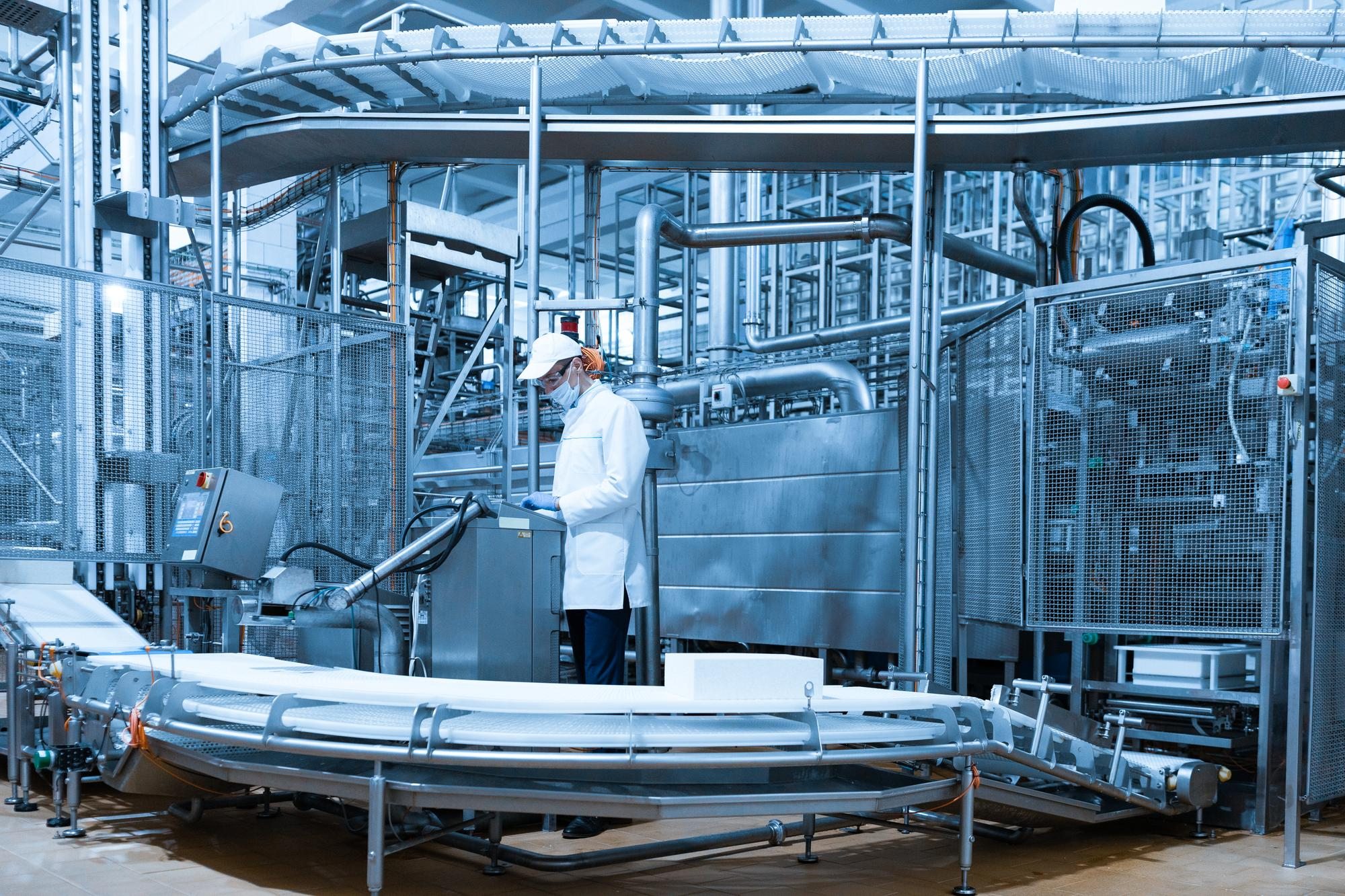
Clean Booth System
A clean workspace for handling semiconductor precursors, pharmaceutical materials, and other high-precision materials.
HEPA filters effectively block outside air.
Class 1,000 or better · 3,840 × 3,840 mm · Samin Science
About Us
SPCI, an advanced chemical materials company since 2009.
Infrastructure
Production, research, and analytical infrastructure with 26 reactors and a total capacity of 76,450 L.
Business Model
3 collaboration models—ODM, OEM, and OBM—tailored to customer needs.
Products
36 products across metallocene catalysts, electronic materials, and specialty chemicals.
ESG Management
Sustainable management implemented through 6 policies and relevant certifications.
Information
Information on company e-brochure, our talent philosophy, employee benefits, careers, and contact information.
RESEARCH FACILITIES
5–70 L
Pilot-Scale Facilities
6 Types
of Research Equipment
Grade 1
Laboratory Safety Environment
9
R&D Professionals (Including 2 PhD Holders)
Using our own equipment, we carry out every stage of the pilot process in-house, from synthesis to separation and drying.
A clean workspace for handling semiconductor precursors, pharmaceutical materials, and other high-precision materials.
HEPA filters effectively block outside air.
Class 1,000 or better · 3,840 × 3,840 mm · Samin Science
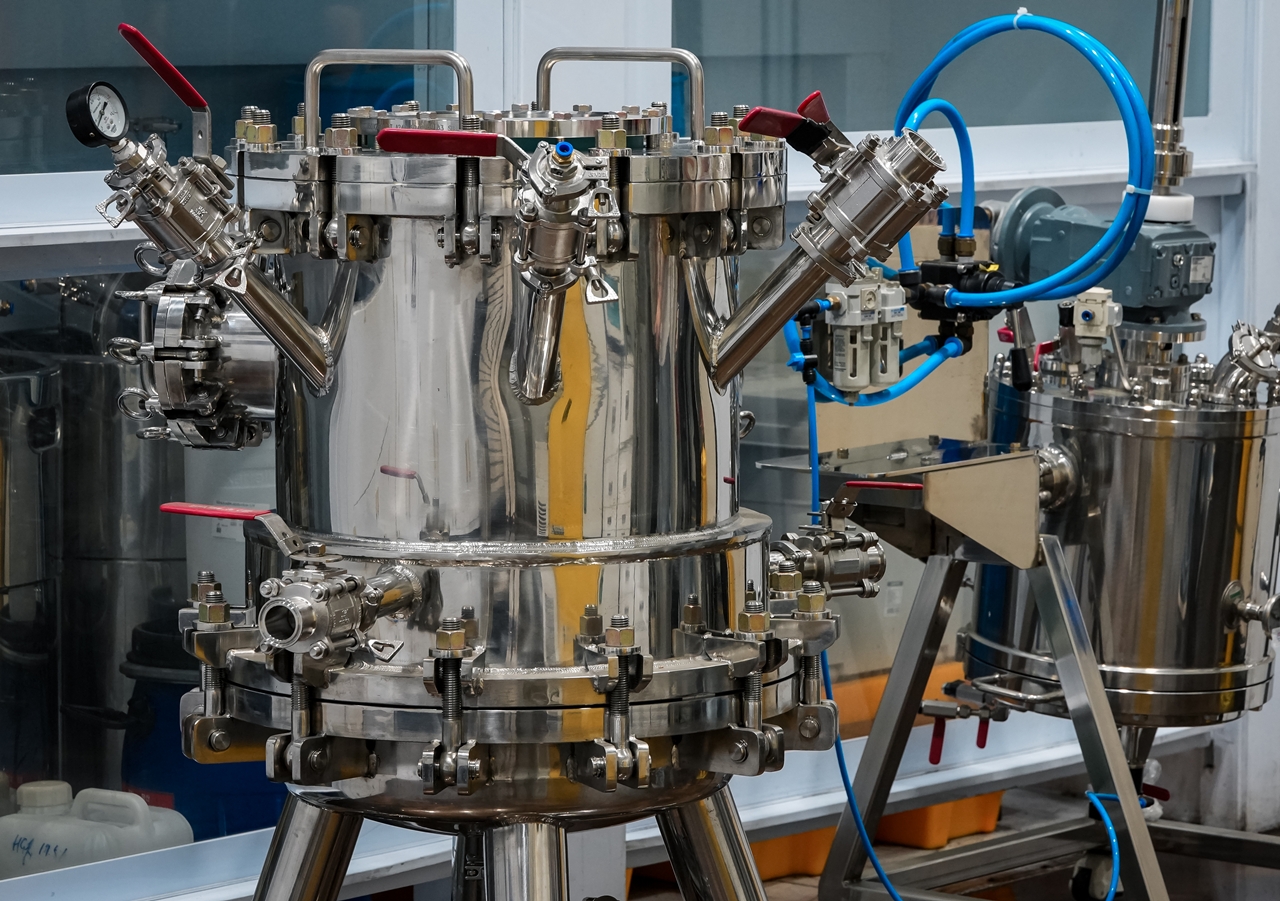
Used to validate high-pressure catalytic reactions at laboratory scale.
The internal surfaces are electropolished.
5 L · 100°C · 10 kg/cm² · 0–1,000 rpm · Ilshin Autoclave
Used to optimize pilot-scale processes and produce trial batches.
50 L × 2 units · 30 L × 1 unit · −15 to 150°C · 0.5 bar · BUCHI
Used to mix raw materials and transfer them between process stages. Jacketed construction enables temperature control.
70 L × 2 units · SUS 316L · 1.9 bar · LS Engineering
Used for solid–liquid separation and product recovery.
50 L × 2 units · 30 L × 1 unit · SUS 316L · 1.9 bar
Integrates solid–liquid separation and drying in a single agitated process.
30 L × 1 unit · SUS 316L · 1.9 bar
Pilot-scale units are classified as glass reactors, whereas production-scale units are classified as glass-lined reactors.
| Equipment | Application | Key Specifications | Material / Quantity |
|---|---|---|---|
| Clean Booth System | High-purity sample handling and particle-controlled operations | ppb-level control · Class 1,000 or better HEPA-filtered air |
3,840 × 3,840 mm |
| 5 L Stirred Autoclave System |
Small-scale high-temperature and high-pressure reactions | 5 L (electropolished internal surfaces) · Max 100°C · Max 10 kg/cm² 0–1,000 rpm · 2-way pitched paddle |
SUS 316L |
| 50 L · 30 L Glass Jacket Reactor |
Pilot-scale synthesis and process condition validation | Volume 50 L · 30 L · −15 to 150°C · Max 0.5 bar 0–200 rpm · 2-way paddle |
50 L × 2 units · 30 L × 1 unit |
| 70 L Moving Vessel | Material transfer and temporary storage | 70 L · Jacket type · Max 1.9 bar | SUS 316L · 2 units |
| Nutsche Filter | Filtration and solid–liquid separation | 50 L · 30 L · Max 1.9 bar | SUS 316L · 50 L × 2 units 30 L × 1 unit |
| Filter & Dryer | Integrated filtration and drying | 30 L · Max 1.9 bar | SUS 316L · 1 unit |
Delivering Reliable Results
in a Safe Research Environment
SPCI proactively manages risks associated with its research activities.
Pilot-scale validation and process development are conducted
in a stable experimental environment.